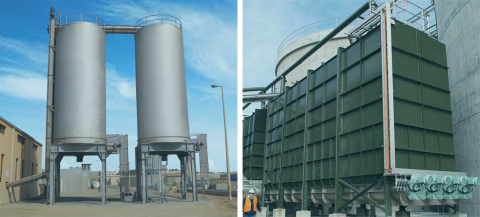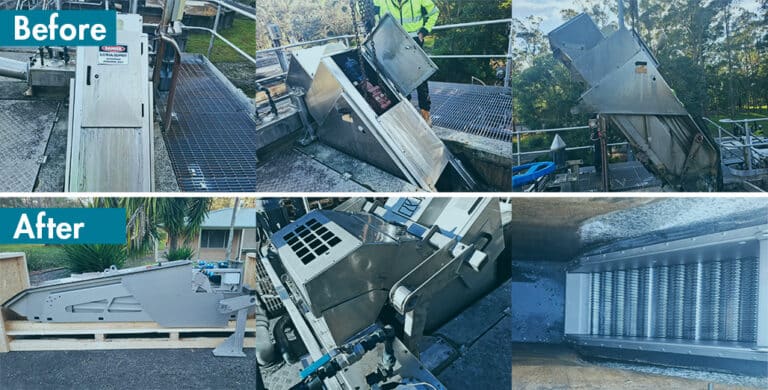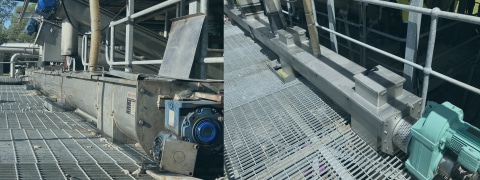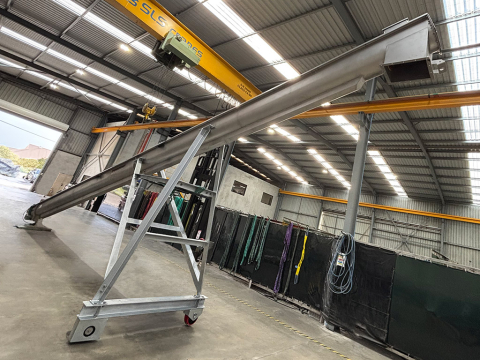

At SPIRAC, environmental responsibility informs every engineering decision. Our Sliding‑Frame and Live‑Bottom silo systems are purpose‑built for dependable sludge flow in wastewater and industrial settings—balancing reliability, service life, and energy performance.
Storage Options Overview
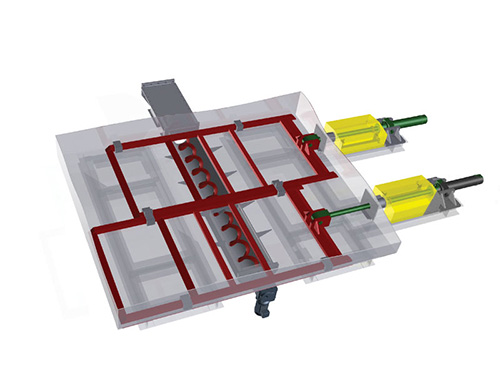
Sliding‑Frame Silos / Receival Bunkers use a hydraulically driven frame to keep material moving toward the extraction screw. The flat‑floor layout maximizes usable volume, especially where headroom is tight.
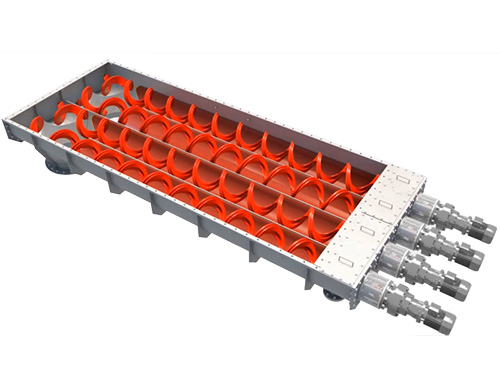
Live‑Bottom Silos / Hoppers employ multiple slow‑speed shaftless spirals to maintain continuous movement of cohesive sludges. Requires tapering of the silo floor to fit the live bottom geometry. It is optimized for difficult, high‑moisture materials.
Sliding‑Frame vs Live‑Bottom — At‑a‑Glance
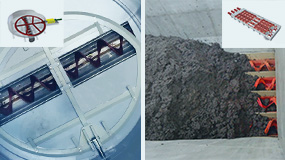
Use this comparison to select the right configuration for your sludge storage, and capacity needs.
| Sliding‑Frame Silo | Live‑Bottom Silo | |
|---|---|---|
| Design Geometry | Works in round or rectangular shape | Best in rectangular form (round possible but uncommon) |
| Floor / Shell | Flat floor, no tapering | Tapered floor to accommodate live bottom |
| Capacity Fit | Large volumes; maximizes storage | Small–medium volumes; taper reduces total storage |
| Material Behaviour | Non‑free‑flowing / moderately sticky | Extremely sticky / cohesive / high‑moisture |
| Flow Mechanism | Hydraulic frame sweeps floor to break bridges | Multiple low‑RPM spirals provide continuous movement |
| Bridging Control | Good | Excellent |
| Maintenance Profile | Very low (few moving parts) | Low (more components, no hydraulics) |
| Energy Use | Low (slow‑speed, high‑torque) | Low (slow‑speed, high‑torque) |
| Cost Sweet Spot | More cost‑effective for larger silos | More cost‑effective for smaller silos |
| Site Constraints | Ideal with height restrictions and FIFO outloading | Suited where taper is acceptable and sticky flow is critical |
| Typical Materials | Dewatered sludge; wood chips; non‑free‑ flowing solids | Sticky sludge cake; severely cohesive materials prone to rat‑holing |
Why This Matters for Sustainability
Both configurations leverage slow‑speed, high‑torque drives to curb power demand, reduce intervention, and extend asset life—supporting safer operations and circular‑economy outcomes through reliable biosolids discharge.